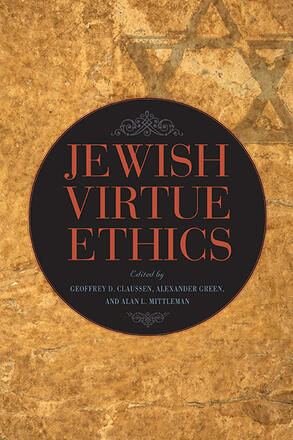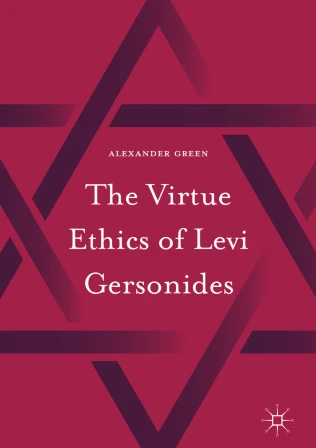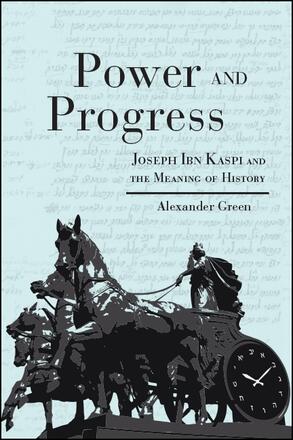
Alexander Green is Assistant Professor of Humanities at the Hamilton School. He previously taught at the University of Buffalo. A scholar of Jewish thought and virtue ethics, his research is on medieval and early modern Jewish philosophy, ethics and the history of biblical interpretation. He is the author of three books: The Virtue Ethics of Levi Gersonides (Palgrave, 2016), Power and Progress: Joseph Ibn Kaspi and the Meaning of History (SUNY Press, 2019), and, Maimonides’ Moral Psychology: the Emotions, the Virtues, and the Good Life (Oxford University Press, 2026) and numerous articles in peer-reviewed publications and edited collections. He also coedited Jewish Virtue Ethics (SUNY Press, 2023).
Green’s new book, Maimonides’s Moral Psychology: the Emotions, the Virtues and the Good Life, was just published with Oxford University Press.
Moses Maimonides is undoubtedly the most famous rationalist of the Jewish tradition, portraying all of Torah as an intellectual project to know the deepest secrets of God and nature. This book, however, argues that this characterization of Maimonides is only partially true. Notwithstanding his focus on the primacy of intellect, he views the emotions or passions as central to the good life. Maimonides does so through imbuing his major work with a series of emotions that are grounded in conflicting moral and psychological archetypes: love vs. fear, moderation vs. abstinence, courage vs. awe, anger vs. calmness, pride vs. humility, and justice vs. compassion.
Maimonides’ Moral Psychology contends that these contrasting emotional paradigms represent two distinct approaches to the world that exist simultaneously in Maimonides’ writings. One is grounded in an understanding and imitation of nature, while the other derives from a skeptical view of the world. In combining the Aristotelian emphasis on virtue and happiness with the Biblical priority of humility and compassion, Maimonides also shows both the psychological and social dangers of each approach if it lacks the other as a corrective.
“Crescas and Gersonides on Freedom, Astrology and Divine Omniscience,” Journal of Jewish Thought and Philosophy 31, no. 1 (2023): 57-72.
“Three Readings of Averroes’ Commentary on Plato’s Republic in Medieval Jewish Thought” in Plato’s Republic in the Islamic Context: New Perspectives on Averroes’ Commentary, ed. Alexander Orwin. Rochester: University of Rochester Press, 2022: 277-296.
“Joseph Ibn Kaspi on Contradictions in the Bible,” Journal of Religion 101, no. 2 (2022): 184-203.
“Four Critiques of Crescas against Maimonides and the Relationship of Intellect and Practice in Religion,” Journal of Textual Reasoning 13, no. 1 (2022): 68-85.
“David Novak, Natural Law and Medieval Jewish Philosophy,” Journal of Religious Ethics 49, no. 4 (2021): 638-656.
“Gersonides on Job’s Ethical Error,” Journal of Jewish Ethics 7, no. 1-2 (2021): 1-12.
“Does God Prefer the Powerful? Reforming the King in Judah Halevi’s Kuzari,” Jewish Studies Quarterly28, no. 1 (2021): 1-20.
“Gersonides,” in The Encyclopedia of Philosophy of Religion, vol. ii, eds. Stewart Goetz and Charles Taliaferro. Wiley-Blackwell, 2021
“Fear and Awe in the Thought of Maimonides,” The Bonhoeffer Legacy: An International Journal 7, no. 1-2 (2019): 41-57.
“MacIntyre and Nussbaum on Diversity, Liberalism and Christianity,” Perspectives on Political Science 46, no. 2 (2017): 137-147.
“A Portrait of Spinoza as a Maimonidean Reconsidered,” Shofar 34, no. 1 (2015): 81-106.
“Maimonides on Courage,” Jewish Studies Quarterly 22, no. 2 (2015): 162-183.
“Spinoza on the Ethics of Courage and the Jewish Tradition,” Modern Judaism 33, no. 2 (2013): 199-225.
“Power, Deception and Comedy: The Politics of Exile in the Book of Esther,” Jewish Political Studies Review 23, no. 1 and 2 (2011): 61-78.